Question 16
Match the major products obtained in the reactions given in List-I with the corresponding structures in List-II and choose the correct option.
List - I
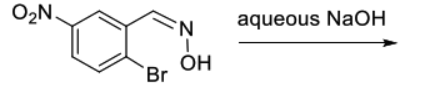
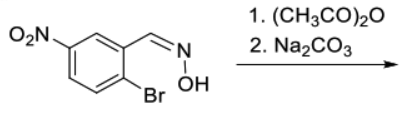
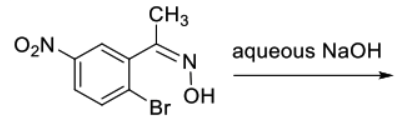
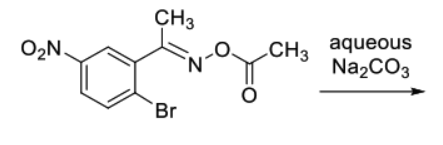
List-II
P-2, Q-1, R-5, S-4
P-1, Q-2, R-4, S-5
P-1, Q-2, R-3, S-4
P-2, Q-1, R-3, S-5
Detailed Solution
:
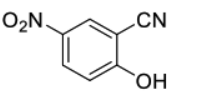
The reactant is an aldoxime with a nitro group para to an ortho-bromine atom. Aqueous is a strong base and a strong nucleophile. It performs two actions:
-
It causes the dehydration of the aldoxime to form a nitrile ().
-
Due to the strong electron-withdrawing nature of the group, the ring is highly activated for Nucleophilic Aromatic Substitution (). The strong nucleophile displaces the atom at the ortho position.
2-hydroxy-5-nitrobenzonitrile (Structure 1).
:
-
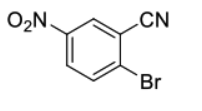
Treatment with acetic anhydride () converts the aldoxime into an O-acetylated oxime (), turning the into a much better leaving group.
-
Aqueous is a mild base. It facilitates an E2-type elimination of acetic acid to yield the nitrile (). However, is not a strong enough nucleophile to undergo and displace the bromine atom.
2-bromo-5-nitrobenzonitrile (Structure 2).
:
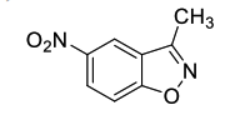
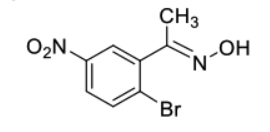
The reactant is a ketoxime. When treated with aqueous (strong base), the slightly acidic oxime hydroxyl group is deprotonated to form an oximate anion (). This oxygen acts as a powerful internal nucleophile. It attacks the ortho-carbon, completely displacing the atom via an intramolecular mechanism. This cyclization results in a 5-membered isoxazole ring.
3-methyl-5-nitrobenzo[]isoxazole (Structure 4).
:
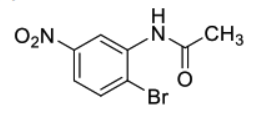
The reactant is an O-acetylated ketoxime. When reacted with aqueous (mild base), the base is only strong enough to hydrolyze the ester linkage (), converting it back to the original oxime (). It is not strong enough to significantly deprotonate the oxime and drive the intramolecular cyclization seen in Reaction R. (E/Z)-1-(2-bromo-5-nitrophenyl)ethan-1-one oxime (Structure 5).
P 1; Q 2; R 4; S 5.
Option B is correct.
Boost Your Exam Preparation!
Move beyond just reading solutions. Access our comprehensive Test Series, original Mock Tests, and interactive learning modules. Many premium tests are completely free!
- Original Mocks & Regular Test Series
- Real NTA-like Interface with Analytics
- Many Free Tests Available